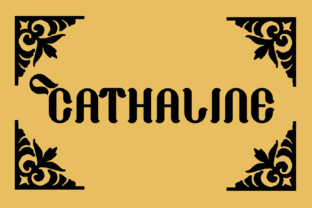
Cathaline: The Medieval Blackletter Font for Distinctive Design
In a digital landscape saturated with clean lines, geometric sans-serifs, and standardized corporate identities, standing out requires more than just a good message; it requires a distinct visual voice. This is where Cathaline enters the conversation. Inspired by the regal aesthetics of Queen Catherine and rooted in the rich tradition of medieval typography, Cathaline is not merely a font; it is a statement piece. It offers designers, marketers, and creators a way to inject history, authority, and elegance into their projects without sacrificing modern readability.
Blackletter typefaces often carry a heavy reputation. They can be difficult to read in long passages, visually overwhelming in large blocks, or associated exclusively with niche subcultures. However, Cathaline breaks this mold. It is a gorgeous blackletter font that has been carefully crafted to sit beautifully alongside both sans-serif and serif fonts alike. This versatility makes it an invaluable tool for professionals who need to balance historical gravitas with contemporary clarity. Whether you are designing a wedding invitation, branding a craft brewery, or creating a high-end editorial layout, understanding how to leverage Cathaline can significantly elevate your work.
The Allure of Medieval Typography in Modern Contexts
To understand why Cathaline matters, one must first appreciate the psychological impact of medieval typography. Fonts inspired by Gothic scripts evoke feelings of tradition, authenticity, and craftsmanship. In an era where consumers are increasingly skeptical of mass-produced content, these visual cues signal quality and care. When used correctly, a typeface like Cathaline does not just display text; it sets a mood. It suggests that the brand or project behind it values heritage and attention to detail.
However, using historical typefaces effectively requires nuance. The key lies in contrast. Cathaline’s strength is not in its ability to stand alone in every context, but in its ability to complement other typographic elements. Its intricate strokes and dramatic serifs create a visual weight that pairs exceptionally well with lighter, cleaner typefaces. This juxtaposition allows for a hierarchy that guides the reader’s eye while maintaining aesthetic harmony. For instance, using Cathaline for a headline immediately draws attention, while a simple sans-serif body text ensures the information remains accessible and easy to digest.
Bridging History and Readability
One of the most significant challenges with blackletter fonts is legibility. If a font is too ornate, readers may struggle to decode the letters, leading to cognitive fatigue and disengagement. Cathaline addresses this by striking a careful balance. While it retains the distinctive character of medieval calligraphy, its proportions have been refined to suit modern eyes. This makes it suitable for short-to-medium length text, such as titles, pull quotes, logos, and decorative accents, rather than lengthy paragraphs.
This limitation is actually a feature, not a bug. It forces designers to be intentional about where they use the font. By reserving Cathaline for moments of emphasis, you ensure that its impact is maximized. When a viewer encounters Cathaline on a page, they recognize it as special. This rarity creates a sense of importance around the message it carries. For bloggers and content creators, this means that headings styled with Cathaline will naturally command more focus from the audience, potentially increasing engagement rates and time spent on page.
Practical Applications Across Industries
The versatility of Cathaline extends across a wide range of design scenarios. Its ability to blend with various styles makes it a flexible asset for professionals in different fields. Below are several practical use cases where Cathaline can drive meaningful results.
- Branding for Artisanal Businesses: Small business owners in sectors like baking, brewing, textiles, or publishing often rely on narratives of craftsmanship. A logo featuring Cathaline instantly communicates a commitment to traditional methods and high-quality materials. It helps these businesses differentiate themselves from competitors who use generic, modern fonts.
- Event Design and Stationery: For weddings, galas, or formal dinners, the right typography sets the tone. Cathaline brings a regal, timeless elegance to invitations and programs. When paired with a delicate script or a classic serif, it creates a sophisticated look that feels personal and curated.
- Editorial and Publishing: Magazine editors and book publishers can use Cathaline for chapter headers, drop caps, or section dividers. This adds a layer of visual interest that breaks up dense text and enhances the reading experience without distracting from the content itself.
- Digital Marketing and Social Media: In a feed filled with bright colors and bold sans-serifs, a post featuring Cathaline can stop the scroll. It offers a unique aesthetic that stands out, particularly for brands targeting audiences interested in history, fashion, luxury goods, or arts and culture.
Strategic Pairing for Maximum Impact
The true power of Cathaline is realized when it is used in combination with other typefaces. Because it is so visually dominant, it requires a partner that can provide stability and balance. The recommendation is to pair Cathaline with fonts that have neutral characteristics.
Pairing with Sans-Serif Fonts: This is perhaps the most effective combination for modern designs. A geometric or humanist sans-serif provides a clean, minimalist backdrop that allows the complexity of Cathaline to shine. The contrast between the structured simplicity of the sans-serif and the organic intricacy of the blackletter creates a dynamic tension that is visually appealing. This pairing is ideal for websites, app interfaces, and promotional materials where clarity is paramount.
Pairing with Serif Fonts: For a more traditional or academic look, Cathaline pairs well with transitional or old-style serif fonts. Both share a connection to print history, which creates a cohesive narrative. This combination works exceptionally well for literary publications, historical documentaries, or luxury brand packaging. The shared heritage of the two fonts ensures they feel like they belong together, reinforcing a sense of established authority.
When selecting pairings, consider the x-height and weight of the secondary font. Since Cathaline has strong vertical stress and thick contrasts, a lighter weight in the companion font helps prevent the design from feeling too heavy. Conversely, if you want to emphasize strength and permanence, a bold serif can work, provided there is sufficient white space to let the elements breathe.
Considerations for Implementation
While Cathaline is a powerful tool, it is not a one-size-fits-all solution. Successful implementation requires thoughtful consideration of context and audience. Here are some factors to keep in mind before incorporating it into your projects.
- Readability Constraints: Avoid using Cathaline for body text, especially on digital screens where small sizes can reduce legibility. Reserve it for headlines, logos, and short phrases. If you must use it for longer text, ensure the font size is large enough and the line height is generous to accommodate the descenders and ascenders typical of blackletter styles.
- Audience Expectations: Consider who will be reading your content. If your audience is looking for quick, straightforward information, a heavy blackletter font might feel pretentious or obstructive. Use Cathaline when your goal is to evoke emotion, convey prestige, or highlight a specific cultural reference. For functional, utility-driven communication, stick to more neutral typefaces.
- Color and Background: Blackletter fonts have intricate details that can get lost against busy backgrounds or low-contrast colors. To maintain clarity, use Cathaline on solid, high-contrast backgrounds. White or light cream backgrounds tend to work best, allowing the dark, detailed strokes to remain sharp and defined.
- Kerning and Spacing: Due to the complex shapes of the letters, proper spacing is crucial. Tight kerning can cause the intricate details of adjacent letters to collide, creating a muddy appearance. Allow extra breathing room between characters and words to preserve the elegance of the typeface.
Enhancing Communication Through Visual Hierarchy
Ultimately, typography is a form of communication. It tells the reader what is important and how to feel about the information presented. By integrating Cathaline into your design strategy, you are adding another layer to that communication. It signals that certain elements are premium, historic, or exceptional. This subtle cue can influence perception and decision-making.
For entrepreneurs and marketers, this means having a tool that can help simplify decisions about brand identity. Instead of trying to explain a brand’s heritage through words alone, you can let the typography do some of the talking. Cathaline provides a visual shorthand for quality and tradition, saving time in conveying your core values. It supports creativity by offering a starting point for thematic design, allowing you to build entire layouts around a central aesthetic concept.
In conclusion, Cathaline is more than just a decorative font. It is a strategic asset for anyone looking to add depth, character, and distinction to their visual communications. By understanding its strengths, respecting its limitations, and pairing it thoughtfully with complementary typefaces, you can create designs that are not only beautiful but also effective. In a world that often prioritizes speed over substance, taking the time to incorporate such a carefully crafted typeface demonstrates a commitment to excellence that resonates with audiences.