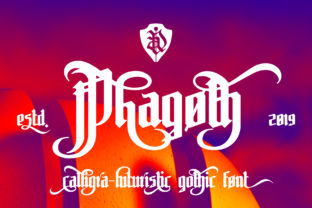
Phagoth: Elevating Typography with Bold Blackletter
In a digital landscape saturated with clean sans-serifs and minimalist geometric forms, there is a distinct hunger for typefaces that carry weight, history, and visual drama. Phagoth answers this call by bridging the gap between medieval tradition and modern design sensibilities. It is not merely a font; it is a statement piece designed to make any project stand out through its adventurous and luscious character.
This bold blackletter typeface takes classic calligraphy into the future, offering designers and creators a tool that feels both ancient and contemporary. Whether you are a seasoned graphic designer looking for a headline that demands attention or a small business owner wanting to brand your product with heritage and strength, understanding how Phagoth fits into your workflow is essential. This guide explores the practical applications of Phagoth across various professional and creative contexts, helping you determine if this distinctive typeface aligns with your specific goals.
Understanding the Essence of Phagoth
At its core, Phagoth is a reimagining of traditional blackletter styles. Historically, blackletter scripts were developed in Europe during the Middle Ages, characterized by their dense, textured appearance and intricate angular strokes. While these fonts can sometimes feel restrictive or difficult to read in long-form text, Phagoth adapts these elements for modern usage. It retains the dramatic flair and structural complexity of its ancestors but refines them to ensure legibility and versatility in digital and print media.
The term "luscious" often describes the rich, full-bodied curves and thick contrasts within the letterforms. This gives the font a tactile quality, almost as if you can feel the pressure of the quill on parchment. However, unlike historical scripts that require specialized training to replicate, Phagoth is accessible via standard font software. This democratization allows anyone with basic design skills to incorporate high-end typographic aesthetics into their work without needing years of calligraphic practice.
Why Different Audiences Care About Distinctive Type
Not every user approaches typography with the same priorities. A marketer might value speed and conversion, while an artist values emotional resonance. Here is how different groups evaluate the value of a font like Phagoth:
- Efficiency vs. Impact: For busy professionals, the primary concern is often whether a font communicates the right message quickly. Phagoth’s bold nature ensures immediate visibility, reducing the need for excessive supporting graphics.
- Brand Identity: Entrepreneurs and small business owners look for uniqueness. In crowded markets, using a common font can make a brand blend in. Phagoth offers a way to signal premium quality, craftsmanship, or rebellious spirit instantly.
- Creative Freedom: Hobbyists and independent creators often seek tools that allow for experimentation. The unique shapes of Phagoth encourage playful layout designs that deviate from standard grid systems.
For Beginners and Hobbyists
If you are just starting your journey into graphic design or DIY branding, complex typefaces can be intimidating. You might worry about kerning issues or readability. However, Phagoth is designed to be forgiving in headline applications. Its strong structure means that even with minor spacing errors, the overall aesthetic remains striking.
Beginners should focus on using Phagoth for short, impactful text such as logos, event posters, or social media banners. Avoid using it for body text. A practical example would be creating a flyer for a local music festival or a craft fair. The bold lines will draw the eye from a distance, and the historic vibe adds a layer of authenticity that appeals to attendees looking for genuine experiences.
For Experienced Designers and Creators
Seasoned professionals know that the power of a font lies in its contrast with other elements. Phagoth serves best when paired with simple, neutral sans-serif fonts. The juxtaposition of the ornate blackletter against clean, modern lines creates a sophisticated tension that elevates the entire composition.
Experienced users will appreciate the flexibility of Phagoth in mixed-media projects. It works exceptionally well in logo design for brands that want to evoke heritage—such as breweries, tattoo studios, or artisanal food producers—but with a twist that suggests they are forward-thinking. The "adventurous" nature of the font allows designers to break conventional rules, perhaps by distorting the letters slightly or integrating them into illustrative elements.
For Educators and Content Creators
Educators and bloggers often struggle to balance professionalism with engagement. Standard academic fonts can feel dry, while overly decorative fonts can seem unprofessional. Phagoth offers a middle ground for specific types of content. It is ideal for section headers in educational materials related to history, art, literature, or mythology.
Consider a university professor designing a syllabus for a course on Gothic Architecture. Using Phagoth for the course title and major headings immediately sets the thematic tone. It acts as a visual cue that prepares the student for the subject matter. Similarly, bloggers writing about vintage culture or retro gaming can use Phagoth to create a nostalgic atmosphere that resonates with their audience.
For Small Business Owners and Marketers
For entrepreneurs, every dollar spent on design must deliver value. The question becomes: does Phagoth offer commercial utility? Yes, particularly in industries where trust and tradition are paramount. If you own a boutique coffee roaster, a leather goods shop, or a law firm specializing in heritage cases, Phagoth can communicate stability and expertise.
Marketing materials benefit from the font's ability to command attention. In a digital feed filled with bright colors and smooth gradients, a stark, blackletter headline stands out. It signals confidence. However, marketers must be cautious. Overuse can lead to visual fatigue. The key is strategic placement. Use Phagoth for the main hook—the first thing the customer sees—and rely on more readable fonts for the details. This approach maximizes impact while maintaining clarity.
Evaluating Quality, Flexibility, and Long-Term Use
When selecting a typeface, long-term usefulness is a critical factor. Trends come and go, but certain typographic styles have enduring appeal. Blackletter has seen periodic revivals throughout design history, from the Victorian era to punk rock aesthetics and modern streetwear. By choosing Phagoth, you are investing in a style that has proven resilience.
Quality and Reliability: High-quality fonts like Phagoth are built with precise vector paths. This ensures that they scale perfectly from a tiny favicon to a massive billboard without losing integrity. For freelancers who manage multiple clients, having a reliable, versatile font reduces the risk of rendering errors across different platforms and devices.
Cost-Effectiveness: While premium fonts may have an upfront cost, their ability to elevate a design can save money in the long run. A strong typographic choice can reduce the need for expensive photography or complex illustrations. If Phagoth can serve as the primary visual anchor for a campaign, it simplifies the production process and lowers overall costs.
Practical Tips for Implementation
To get the most out of Phagoth, consider these practical guidelines:
- Limit Usage: Reserve Phagoth for headlines, titles, and short phrases. Never use it for paragraphs of text.
- Pair Wisely: Combine it with clean, highly legible fonts like Helvetica, Roboto, or Open Sans to balance the visual weight.
- Watch Color Contrast: Due to the density of the letters, ensure high contrast between the text and background. Light gray text on a white background may become illegible.
- Test at Scale: Always preview the font at the size it will be used. What looks good on a large monitor may lose detail when printed small.
Determining If Phagoth Fits Your Needs
Deciding whether to adopt Phagoth depends on your specific project requirements. Ask yourself: Does my project need to convey strength, history, or boldness? Am I looking for a focal point that requires minimal supporting graphics? Do I want my brand to feel established yet innovative?
If the answer to these questions is yes, Phagoth is likely an excellent addition to your toolkit. It offers a unique solution for those who find standard fonts too generic and traditional calligraphy too difficult to implement. By taking classic calligraphy to the future, Phagoth provides a bridge between past and present, allowing creators to tell richer stories through their typography. Whether you are designing a wedding invitation, a tech startup logo, or a textbook cover, the adventurous spirit of Phagoth can add a layer of depth and personality that transforms ordinary text into extraordinary communication.