Vorname: Mastering Gothic Typography for Modern Design
In an era where visual noise is the default state of digital communication, standing out requires more than just bold colors or flashy animations. It demands a foundation of strong, intentional typography. Enter Vorname, a Gothic style typeface that bridges the gap between historical weight and contemporary clarity. For designers, developers, and brand strategists looking to inject authority and elegance into their projects, understanding the nuances of this font family is essential.
Gothic typefaces, often referred to as Blackletter in their most traditional forms, have a storied history. They evoke tradition, stability, and a certain gravitas that sans-serif fonts simply cannot replicate on their own. However, modern adaptations like Vorname strip away some of the archaic complexity while retaining the distinctive character that makes these fonts so compelling. This article explores how Vorname can be utilized effectively across various professional and creative landscapes.
Understanding the Anatomy of Vorname
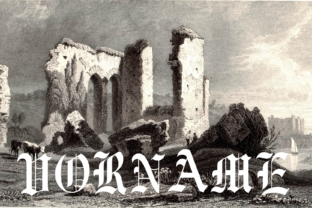
Before diving into applications, it is crucial to understand what makes Vorname distinct. Unlike its medieval predecessors which can be dense and difficult to read at small sizes, Vorname is engineered for legibility without sacrificing aesthetic impact. The term "Gothic" in typography typically refers to the structural integrity and vertical stress of the letterforms.
- Vertical Stress: The primary axis of the letters runs vertically, giving the text a sense of height and structure.
- Contrast: There is a deliberate contrast between thick and thin strokes, creating visual rhythm.
- Sharp Serifs: The terminals are often sharp and angular, contributing to a precise, crafted feel.
This combination allows Vorname to function not just as a display font but as a versatile tool for branding. It avoids the trap of being purely decorative by maintaining a clean line width that ensures readability even when scaled down for mobile interfaces or printed collateral.
Why Choose Vorname for Your Brand?
Selecting a typeface is one of the most significant decisions in brand identity. Fonts communicate subliminally before a single word is read. Vorname communicates heritage, craftsmanship, and sophistication. Here is why it stands out in a crowded market:
- Distinctive Identity: In a sea of Helvetica and Roboto, a well-used Gothic typeface immediately signals uniqueness.
- Cross-Platform Versatility: While rooted in tradition, Vorname’s design principles allow it to render cleanly on screens, from high-resolution Retina displays to standard web browsers.
- Emotional Resonance: The font evokes feelings of trust and timelessness, making it ideal for industries that rely on long-term relationships with clients.
For entrepreneurs and business owners, this means your logo, website header, or packaging doesn't just look good—it feels established. It suggests that your company has depth and history, even if you are a startup.
Practical Applications Across Industries
The utility of Vorname extends far beyond simple logo design. Its adaptability makes it a valuable asset in several key areas of modern commerce and creativity.
Branding and Logo Design
Perhaps the most common use case is in logo creation. Vorname provides a strong anchor for visual identities. Consider a boutique coffee roaster, a legal firm, or a high-end fashion label. Each of these entities benefits from the perceived quality associated with Gothic styles. When used correctly, Vorname adds a layer of premium perception to any mark.
However, caution is advised. Because the font is visually heavy, it works best as a headline or logotype rather than body text. Pairing Vorname with a clean, neutral sans-serif for secondary information creates a balanced hierarchy that guides the user’s eye effectively.
Editorial and Publishing
For bloggers, publishers, and educators, typography plays a huge role in reader retention. Using Vorname for chapter titles, pull quotes, or section headers can break up dense blocks of text and add visual interest. It acts as a visual pause, encouraging the reader to engage more deeply with the content.
In educational materials, particularly those focused on history, art, or literature, Vorname can contextualize the material. A textbook on European history might use Vorname for chapter headings to subtly reinforce the geographical and temporal setting of the content.
Digital Marketing and Web Design
In the digital space, first impressions happen in milliseconds. A website header featuring Vorname can instantly differentiate a brand from competitors using generic templates. It is particularly effective for:
- Landing Pages: Where the main headline needs to capture attention immediately.
- Email Campaigns: Subject lines or pre-header text styled with Vorname can increase open rates by offering a unique visual experience in the inbox.
- Social Media Graphics: Instagram posts or LinkedIn banners benefit from the boldness of Gothic type, which remains readable even at small thumbnail sizes.
Best Practices for Implementation
To get the most out of Vorname, it is important to follow established typographic rules. Misuse can lead to cluttered designs that hinder communication rather than enhance it.
Pairing Strategies
Never pair two Gothic typefaces together unless you are an expert in typographic contrast. Instead, let Vorname shine by pairing it with a complementary sans-serif or a light serif. For example:
- Vorname + Open Sans: Creates a modern, approachable yet authoritative look.
- Vorname + Lato: Offers warmth and balance, softening the rigidity of the Gothic form.
- Vorname + Merriweather: Enhances the literary feel, suitable for publishing and editorial contexts.
Spacing and Kerning
Gothic fonts often require careful attention to tracking (letter-spacing) and leading (line-height). Because the characters have sharp angles and varying stroke widths, tight spacing can cause visual vibration or make the text appear muddy. Always increase tracking slightly when using Vorname in all-caps headlines to improve legibility.
Color and Contrast
The dark, heavy nature of Vorname demands high contrast backgrounds. Avoid placing black Vorname text on dark gray backgrounds. Instead, opt for white or off-white backgrounds with deep black or navy blue text. If you wish to use color, ensure it is saturated enough to maintain the weight of the letters without losing definition.
Common Pitfalls to Avoid
Even experienced designers can stumble when working with expressive typefaces. Here are a few common mistakes to watch out for:
Overuse: Do not use Vorname for entire paragraphs. It will fatigue the reader and reduce comprehension. Reserve it for emphasis.
Inappropriate Context: While Vorname is versatile, it may not be suitable for every industry. A tech startup focused on AI and future-forward innovation might find Vorname too traditional or "old world." In such cases, a sleeker geometric sans-serif might better reflect the brand's values.
Low Resolution: Ensure that the font files are optimized for web use (WOFF2 format) to prevent pixelation on different devices. Poor rendering can ruin the sharp edges that make Vorname attractive.
Conclusion
Vorname is more than just a font; it is a strategic design element that can elevate the perceived value of your work. By understanding its characteristics and applying it thoughtfully, professionals across marketing, education, and creative fields can create communications that are not only seen but remembered. Whether you are rebranding a legacy business or launching a new personal blog, incorporating Vorname into your typographic toolkit offers a reliable path to distinguished, effective design.
Start small. Try it in a header. Experiment with pairing. Observe how it changes the tone of your message. In the right hands, Vorname is a powerful ally in the quest for clear, compelling visual communication.