Zebra Cross: Why This Brush Font Needs Your Attention (And How to Use It Right)
If you are looking for a typeface that commands attention without screaming for it, Zebra Cross is likely already on your radar. It is not just another decorative font; it is a distinct brush-style typeface that brings a raw, organic energy to digital and print designs. For creators, marketers, and small business owners, the difference between a design that feels "off" and one that resonates often comes down to typography. Choosing the right font is rarely about picking something pretty; it is about selecting a tool that communicates the correct tone.
Many designers fall into the trap of treating fonts as mere aesthetic choices rather than functional assets. Zebra Cross offers a unique texture that can elevate a brand identity, but it also carries specific pitfalls. If you download this font and immediately slap it across a website header or a business card without understanding its mechanics, you risk creating visual noise instead of clarity. Let’s explore what makes this brush font special, where people typically go wrong, and how to leverage its strengths effectively.
Understanding the Appeal of Zebra Cross
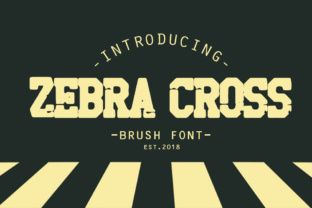
At its core, Zebra Cross is a brush font. This means it mimics the stroke variations, ink bleeds, and dynamic pressure points of a physical paintbrush or marker. In an era where digital interfaces often feel sterile and uniform, this kind of organic texture provides a human touch. It suggests creativity, effort, and authenticity—qualities that are highly valued in modern branding.
The name itself implies a certain rhythm and structure, yet the visual execution remains fluid. This duality is what makes it suited for various different type of designs. You might see it used successfully in:
- Lifestyle Branding: For cafes, boutiques, or wellness studios that want to appear approachable yet stylish.
- Event Posters: Where high impact and artistic flair are necessary to draw eyes in a crowded space.
- Social Media Graphics: As a headline element to break up the monotony of standard sans-serif text.
However, the very qualities that make Zebra Cross attractive—its irregularity and boldness—are also the reasons it requires careful handling. It is a statement font, not a background font.
Common Mistakes When Using Brush Fonts
Even experienced designers can stumble when integrating expressive typefaces like Zebra Cross into their workflow. The most frequent error is misjudging the font’s role within the hierarchy. Because it is so visually heavy, it naturally dominates any layout it touches. Here are the critical areas where users often need correction.
Overusing Legibility
The biggest misconception is that because a font looks cool, it should be used everywhere. A common mistake is using Zebra Cross for body copy or long-form text. Brush fonts are designed for headlines, logos, and short phrases. When you stretch them out into paragraphs, the irregular edges compete with each other, making the text difficult to read. This directly impacts usability and reader satisfaction. If your audience has to squint or pause frequently to decipher your message, the communication has failed regardless of how artistic the font is.
Better Approach: Reserve Zebra Cross for titles, subheads, or call-to-action buttons. Pair it with a clean, neutral sans-serif or serif font for all supporting text. This contrast creates balance and ensures your message is both beautiful and accessible.
Neglecting Spacing and Kerning
Brush fonts have unique spacing requirements. Unlike geometric fonts with consistent widths, brush styles often have varying thicknesses and overhangs. Many users apply default tracking (letter-spacing) settings, which can cause the strokes to collide or look disjointed. Tight kerning can make the letters bleed into one another, while excessive spacing can destroy the cohesive "brushstroke" feel.
Practical Tip: Always manually adjust the spacing for key words. Zoom in to 200% and check the negative space between characters. You want the letters to feel connected by the rhythm of the brush, not cramped together.
Ignoring Context and Contrast
Another oversight is placing Zebra Cross against busy backgrounds or complex images. The intricate details of the brush strokes can get lost in visual clutter. This reduces the effectiveness of the design and forces the viewer to work too hard to process the information. It also affects the perceived quality of the brand; if the text is hard to distinguish, the design may appear amateurish.
To avoid this, ensure there is sufficient contrast. Solid, dark backgrounds often work well to highlight the lighter parts of the brush strokes, while light backgrounds can emphasize the darker, heavier parts. Avoid placing the font over photographs with high detail unless you use a solid overlay or drop shadow to separate the text from the image.
Evaluating Quality Before You Download
Not all versions of Zebra Cross available online are created equal. With the ease of sharing files, you may encounter low-resolution scans, poorly vectorized paths, or incomplete character sets. These technical flaws can ruin a professional project. A jagged edge on a vector file will become obvious when scaled up for large-format printing, leading to wasted time and money on reprints.
Before committing to a source, check the following:
- Vector vs. Raster: Ensure you are downloading a vector format (like .OTF or .TTF) rather than a pixel-based image. Vector fonts scale infinitely without losing quality.
- Character Set: Verify that the font includes all the punctuation, numbers, and special characters you might need. Missing symbols can disrupt the flow of your design.
- Licensing: Always review the license agreement. Some brush fonts are free for personal use only. Using them for commercial projects without permission can lead to legal issues and unexpected costs.
Maximizing Impact with Strategic Application
Once you have selected a high-quality version of Zebra Cross, the goal is to integrate it strategically. Think of it as an accent color in interior design—it draws the eye, but it shouldn’t overwhelm the room. Use it to highlight key selling points, create a memorable logo mark, or add personality to a minimalist layout.
For example, a freelance graphic designer might use Zebra Cross for their name in a portfolio header, paired with a simple grid layout for the case studies. This combination says, "I am creative and bold, but I am also organized and professional." Similarly, a small business owner could use it for a limited-time offer banner, creating urgency and excitement that standard fonts cannot achieve.
Remember that consistency is key. If you decide to use Zebra Cross as part of your brand identity, stick to it. Do not swap it out for another trendy font every few months. Building recognition takes time, and having a consistent typographic voice helps customers remember who you are.
Final Thoughts on Making the Right Choice
Zebra Cross is a powerful tool in the designer’s arsenal, but power requires control. By avoiding the common traps of overuse, poor spacing, and ignoring context, you can harness its full potential. Take the time to test it in your specific design context. Look at it in black and white to check for contrast, zoom in to check for legibility, and step back to see the overall balance.
When used correctly, this brush font does more than just display text; it adds emotion, texture, and life to your work. It bridges the gap between traditional craftsmanship and modern digital design. Whether you are a seasoned pro or just starting out, understanding the nuances of Zebra Cross will help you make smarter decisions, save time, and produce results that truly stand out. Don’t just pick a font because it looks good in isolation; pick it because it serves your message.