Edgar: Reviving the Art of Blackletter for Modern Design Projects
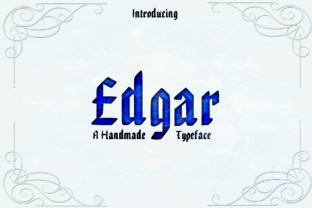
In an era where digital minimalism and sans-serif typography dominate screens, there remains a profound appreciation for typefaces that carry history, weight, and character. Among these, Edgar stands out as a stunning blackletter font with a unique twist. It bridges the gap between medieval manuscript traditions and contemporary design needs, offering designers, branding experts, and creatives a tool to evoke old-time charm without sacrificing readability or modern aesthetics.
Whether you are designing a logo for a craft brewery, creating a poster for a music festival, or simply looking to add depth to a personal project, understanding how to leverage Edgar effectively can transform your visual communication. This guide explores what makes Edgar distinct, the challenges it solves, and practical ways to implement it in your work.
Understanding the Essence of Edgar
Blackletter, also known as Gothic script, has roots in the 12th century and was widely used across Europe for formal documents and religious texts. Traditional blackletter fonts can often be dense, difficult to read at small sizes, and visually overwhelming. However, Edgar reinterprets this classic style with a modern sensibility.
The "unique twist" in Edgar lies in its balance. While it retains the sharp angles, vertical stress, and intricate details characteristic of historical Fraktur and Textura styles, it is optimized for legibility and versatility. The strokes are slightly more open than their ancient counterparts, allowing for better spacing and clearer recognition even in complex layouts. This makes Edgar not just a novelty choice, but a functional one for modern applications.
Identifying Your Design Needs
Before incorporating any typeface into a project, it is crucial to identify the specific goals and challenges you are facing. Here are common scenarios where traditional fonts fall short and Edgar shines:
- Desire for Authenticity: You need a brand identity that feels established, trustworthy, and rooted in tradition, such as for a heritage brand or artisanal product.
- Visual Impact: Standard serif or sans-serif fonts feel too generic. You need a headline typeface that commands attention and creates immediate emotional resonance.
- Niche Aesthetics: Your project relates to themes like Halloween, heavy metal music, fantasy literature, or vintage Americana, where gothic elements are culturally relevant.
- Bridging Eras: You want to combine historical elegance with clean, modern graphic design principles without the two clashing.
If these resonate with your current project, Edgar offers a solution that respects the past while serving present-day usability standards.
Practical Applications of Edgar
One of the most significant advantages of Edgar is its adaptability. Because it is designed with a modern twist, it performs well in various contexts where pure historical blackletter might fail. Below are several practical ways to use Edgar to achieve professional results.
Branding and Logo Design
For businesses aiming to project a sense of craftsmanship and heritage, Edgar is an excellent choice for logotypes. Imagine a local distillery using Edgar for its name, paired with a simple, clean sans-serif for the tagline. This contrast highlights the boldness of the blackletter while ensuring the supporting information remains accessible. The result is a logo that feels both timeless and contemporary.
When designing with Edgar, consider the following:
- Pairing: Always pair Edgar with neutral, geometric sans-serifs (like Helvetica or Futura) for body text. This prevents visual fatigue and ensures that essential information is easy to read.
- Spacing: Blackletter fonts require generous tracking (letter-spacing). Tight kerning can make the intricate details of Edgar merge into an illegible blob. Give the letters room to breathe.
Event Posters and Music Merchandise
The music industry frequently utilizes gothic aesthetics, particularly in genres like metal, punk, and folk. Edgar’s sharp lines and dramatic presence make it ideal for concert posters, album covers, and band merchandise. Its "old-time charm" adds a layer of mystique and gravity to the event or artist.
For example, a rock band launching a new tour could use Edgar for the main stage names, utilizing a distressed texture effect to enhance the rugged feel. The unique twist in Edgar ensures that even with effects applied, the core structure of the letters remains intact and recognizable.
Packaging and Labels
In the world of consumer goods, packaging is the first point of contact. For products like hot sauce, cigars, leather goods, or specialty coffees, Edgar can convey quality and exclusivity. A label for a premium hot sauce might feature Edgar in gold foil stamping against a matte black background. This combination leverages the font’s ornate nature to suggest luxury and bold flavor profiles.
Overcoming Common Challenges
While Edgar is versatile, it does come with specific challenges that designers must manage to ensure successful implementation.
Readability Concerns
The primary risk with any blackletter font is legibility. Users may struggle to decipher text if the size is too small or if it is placed over busy backgrounds. To mitigate this:
- Limit Usage: Use Edgar primarily for headlines, titles, or short phrases. Avoid using it for long paragraphs of body copy.
- Contrast is Key: Ensure high contrast between the font color and the background. Light gray on white will render Edgar nearly invisible due to its thin internal details.
Tone Appropriateness
Not every brand should use blackletter. In highly technical, medical, or corporate environments, Edgar might appear too theatrical or archaic. It is essential to assess whether the "old-time charm" aligns with your brand voice. If your goal is to communicate innovation and speed, a sleek sans-serif is likely a better fit. However, if you aim to communicate stability, tradition, or artistic flair, Edgar is a powerful ally.
Strategies for Different User Types
Different professionals approach typography with varying priorities. Here is how different users can tailor their use of Edgar:
For Brand Strategists
Focus on the narrative. Edgar tells a story of heritage and authenticity. Use it when you need to anchor a modern brand in a sense of history. Consider how the font interacts with other brand assets like logos, icons, and color palettes to create a cohesive ecosystem.
For Graphic Designers
Experiment with scale and texture. Since Edgar has intricate details, try scaling it up significantly to let the forms shine. You can also explore monochrome treatments or subtle gradients to add depth without distracting from the letterforms themselves.
For DIY Enthusiasts and Hobbyists
Keep it simple. If you are creating a wedding invitation, a birthday card, or a home decor sign, use Edgar sparingly. Pair it with elegant handwriting scripts for a romantic, vintage look. Ensure that the final output is printed at a high resolution to preserve the crisp edges of the font.
Conclusion: Embracing the Twist
Edgar is more than just a font; it is a bridge between eras. By combining the dramatic flair of blackletter with modern usability considerations, it offers a unique solution for designers seeking to inject character and history into their work. Whether you are crafting a brand identity, designing promotional materials, or adding a touch of elegance to a personal project, Edgar provides the tools to do so effectively.
As you move forward with your designs, remember that the key to success lies in balance. Let Edgar be the star of the show, but support it with clean, readable supporting elements. By respecting the font’s strengths and acknowledging its limitations, you can create designs that are not only visually striking but also functionally sound. Explore the possibilities, experiment with pairing, and let the old-time charm of Edgar inspire your next creative breakthrough.