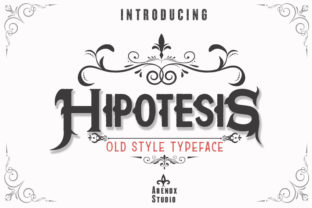
Hipotesis: Evaluating a Retro-Inspired Blackletter for Modern Design Projects
In the landscape of digital typography, finding a font that balances historical authenticity with contemporary usability is often a challenge. Many blackletter typefaces lean too heavily into medieval aesthetics, resulting in poor legibility on screens or an overly aggressive tone that clashes with modern branding. Hipotesis emerges as a distinct alternative within this category. Inspired by tattoo lettering traditions, it offers a unique blend of vintage flair and playful character. This article provides an objective analysis of Hipotesis, examining its visual characteristics, practical applications, and suitability for various professional contexts.
The Intersection of Tattoo Art and Typography
To understand the value of Hipotesis, one must first recognize its primary inspiration: traditional tattoo lettering. Unlike formal Fraktur or Old English styles used in academic publishing or legal documents, tattoo lettering was designed to be bold, readable, and expressive on human skin. It prioritizes impact over intricate detail. Hipotesis captures this spirit. The font features thick, confident strokes with a slightly irregular, hand-drawn quality that suggests movement and personality.
This "tattoo-inspired" approach gives the typeface a fun, rebellious edge without sacrificing structure. It avoids the stiffness often associated with rigid gothic fonts. Instead, it feels organic, as if it were inked by hand. For designers working on projects that require a sense of history, craftsmanship, or counter-culture appeal, this distinction is crucial. It allows for a retro vibe that feels lived-in rather than manufactured.
Visual Characteristics and Aesthetic Appeal
Hipotesis is defined by its strong contrast between thick and thin lines, a hallmark of classic blackletter design. However, the execution here is softened by the influence of American Traditional tattoo art. The serifs are sharp but not overly ornate, and the letterforms maintain a consistent weight that ensures readability even at smaller sizes.
- Stroke Weight: The heavy weights provide excellent presence in headlines and logos, ensuring they command attention without overwhelming the layout.
- Letterform Shape: The characters have a slight slant and variation in thickness, mimicking the natural flow of a brush or needle. This adds a dynamic energy to static text.
- Vintage Texture: While primarily a vector-based digital font, Hipotesis evokes the texture of aged paper or worn wood. It pairs well with distressed backgrounds or minimalist designs where the font itself acts as the primary graphic element.
The color palette associated with Hipotesis is typically monochromatic, relying on stark black against white or light backgrounds. This high contrast enhances its legibility and reinforces its bold, no-nonsense aesthetic. It is a typeface that does not whisper; it speaks clearly and directly.
Practical Applications in Professional Design
One of the most common questions regarding decorative fonts is their versatility. Can Hipotesis be used beyond novelty items? The answer is yes, provided the context is appropriate. Its strength lies in its ability to convey specific moods quickly and effectively.
Branding and Logo Design
For small businesses, breweries, barbershops, craft studios, or music venues, Hipotesis offers an immediate visual shorthand. It signals tradition, craftsmanship, and a connection to subcultures. A logo using Hipotesis can stand out in a crowded market by differentiating itself from the sea of clean, sans-serif corporate identities. It works particularly well when paired with simple geometric shapes or line art, allowing the complexity of the letters to shine.
Editorial and Print Media
In magazine layouts, zines, or event posters, Hipotesis serves as an excellent display font. It is ideal for pull quotes, section headers, or cover titles. Because it carries such a strong personality, it should be used sparingly. Using it for body text would fatigue the reader, but using it for key messages draws the eye and emphasizes importance. It adds a layer of sophistication through its historical references while remaining accessible due to its tattoo-art roots.
Digital Content and Social Media
As content creators seek ways to break through algorithmic noise, distinctive typography becomes a valuable asset. Hipotesis performs well in social media graphics, YouTube thumbnails, and banner ads. Its bold outlines ensure visibility even on small mobile screens. When combined with vibrant colors or retro gradients, it creates a cohesive visual identity that resonates with audiences interested in vintage culture, rock music, or artisanal products.
Evaluating Usability and Workflow Integration
From a technical standpoint, Hipotesis demonstrates good construction. The kerning pairs are generally well-balanced, reducing the need for manual adjustment in most scenarios. This is a significant advantage for freelancers and marketers who need to produce assets quickly. The font supports standard Latin characters, making it functional for English-language content. However, users should verify extended language support if targeting international audiences.
The file formats typically included with such fonts—usually OTF and TTF—ensure compatibility across major design software like Adobe Illustrator, Photoshop, InDesign, and Figma. This broad compatibility means that whether you are a seasoned graphic designer or a hobbyist using Canva, you can integrate Hipotesis into your workflow seamlessly.
However, designers should be mindful of licensing restrictions. As with any commercial typeface, understanding the scope of use is critical. Some licenses may restrict usage in merchandise resale or unlimited digital impressions. Always review the end-user license agreement (EULA) to ensure compliance, especially when creating client work.
Limitations and Considerations
No single typeface is a universal solution, and Hipotesis is no exception. Its strong stylistic voice means it is not suitable for every project. It lacks the neutrality required for financial reports, medical information, or technical manuals. In these contexts, clarity and neutrality are paramount, and Hipotesis’s decorative nature would distract from the message.
Additionally, because it is a display font, it is not intended for long-form reading. Overusing it can lead to visual clutter and reduced accessibility for readers with dyslexia or other visual processing challenges. Best practice dictates using Hipotesis for headings, titles, and short phrases, while pairing it with a highly legible sans-serif or serif font for body copy. This combination leverages the strengths of both typefaces: the emotional impact of Hipotesis and the readability of a neutral companion font.
Who Should Consider Hipotesis?
Hipotesis is best suited for professionals and creators who value character and historical resonance in their visual communication. It is an excellent choice for:
- Brand Identity Specialists: Looking to create memorable, distinct logos for lifestyle brands.
- Event Marketers: Designing posters and flyers for concerts, festivals, or themed parties.
- Content Creators: Seeking to establish a recognizable visual style on social platforms.
- Small Business Owners: Wanting to convey a sense of tradition and quality in their packaging or signage.
If your goal is to evoke nostalgia, rebellion, or artisanal pride, Hipotesis provides a reliable and stylish tool. It bridges the gap between old-world calligraphy and modern pop culture, offering a versatile option for those willing to experiment with typographic hierarchy.
Final Thoughts on Long-Term Value
Trends in design are cyclical, but certain elements remain timeless. The appeal of tattoo lettering and blackletter aesthetics has persisted for decades, adapting to new mediums and contexts. Hipotesis taps into this enduring interest. By combining the rigor of blackletter with the freedom of tattoo art, it creates a typeface that feels both familiar and fresh.
For designers evaluating their toolkit, Hipotesis represents a solid addition for specific use cases. It is not a replacement for core body text fonts, but it excels as a specialized display font. Its ability to add a unique retro vibe makes it a valuable asset for projects that aim to stand out. Ultimately, the decision to use Hipotesis depends on the narrative you wish to tell. If your project benefits from a bold, historic, and slightly rugged aesthetic, this font delivers with precision and style.