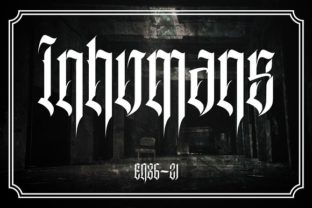
Evaluating Inhumans: A Deep Dive into the Dripping Blackletter Typeface for Dark Design Projects
Selecting the right typography is rarely a purely aesthetic decision; it is a strategic choice that dictates the mood, readability, and perceived authority of a design. When working within genres that demand intensity—such as horror, heavy metal branding, or thriller marketing—the standard typographic rules often need to be bent or broken entirely. This is where specialized display fonts like Inhumans come into play. Designed specifically to evoke visceral reactions, this typeface offers a unique combination of gothic structure and macabre detailing that sets it apart from conventional blackletter options.
For designers, art directors, and content creators evaluating their toolkits, understanding the specific application and limitations of a font like Inhumans is crucial. It is not merely a "scary" font; it is a highly stylized display type with distinct characteristics that require careful handling. This analysis explores what makes Inhumans distinct, how it compares to broader categories of decorative typography, and when it serves as the optimal choice versus when a more subdued alternative might be necessary.
Understanding the Anatomy of Inhumans
To evaluate any typeface effectively, one must first understand its visual language. Inhumans belongs to the blackletter family, a style rooted in medieval manuscript writing characterized by dense, angular strokes and complex interplay between thick and thin lines. However, Inhumans diverges significantly from traditional Fraktur or Old English styles by incorporating modern, aggressive modifications.
The defining feature of Inhumans is its dripping letterforms. Unlike static serif or sans-serif fonts, the letters in Inhumans appear to be melting, bleeding, or dissolving at the edges. This effect creates an immediate sense of unease, decay, or supernatural activity. The drips are not random; they are integrated into the ligatures and terminals of the characters, maintaining legibility while amplifying the thematic impact. For a designer, this means that the font does just half the work—it provides the texture and narrative context before a single word is read.
This distinctiveness makes Inhumans particularly effective for headlines, logos, and poster art where visual punch is prioritized over body text utility. The font’s ability to convey a "scary feel" without relying on cliché imagery allows it to stand out in crowded digital feeds or print media. However, this high level of stylistic expression comes with inherent constraints regarding usage scope.
Comparative Analysis: Inhumans vs. Standard Gothic and Horror Fonts
When researching alternatives, designers often encounter a spectrum of dark typography. Understanding where Inhumans sits on this spectrum helps in making informed decisions about project suitability.
Inhumans vs. Traditional Blackletter
Traditional blackletter fonts (often referred to generically as "Old English") are associated with heritage, formality, and historical weight. They are rigid, structured, and typically used for beer labels, university crests, or formal invitations. While they can be adapted for darker themes, they lack the organic chaos of Inhumans. If a project requires a sense of ancient tradition mixed with menace, a traditional blackletter might be appropriate. However, if the goal is to evoke immediate fear, gore, or supernatural dread, Inhumans is superior because its dripping elements suggest active decay rather than static history.
Inhumans vs. Generic "Horror" Display Fonts
The market is saturated with fonts labeled as "horror." Many rely on jagged edges, blood splatters, or hand-drawn scratchiness. These fonts often suffer from poor kerning and inconsistent stroke weights, which can make them difficult to use professionally. Inhumans distinguishes itself through a higher degree of polish. The drips are vector-smooth and the character set is cohesive. This professional finish ensures that even when depicting something gruesome, the design remains clean and intentional rather than messy or amateurish. For commercial projects requiring a polished yet terrifying aesthetic, Inhumans offers a more reliable foundation than many generic horror alternatives.
Inhumans vs. Distressed Sans-Serif
Sometimes, a less literal approach is preferred. Modern horror aesthetics often lean toward distressed sans-serifs—clean geometric shapes that have been eroded or scratched. These fonts offer greater readability and a more contemporary vibe. Inhumans, being a blackletter, is inherently more ornate and harder to read at small sizes. The tradeoff here is clear: choose a distressed sans-serif for long-form readability with a dark edge, but choose Inhumans for maximum atmospheric impact where reading speed is secondary to emotional resonance.
Strategic Use Cases and Best-Fit Scenarios
Knowing what a font *can* do is only half the equation; knowing where it *should* be used is what separates good design from great design. Inhumans is a powerful tool, but it is a specialist, not a generalist.
- Event Posters and Flyers: For Halloween parties, horror movie premieres, or escape room advertisements, Inhumans is an excellent choice. The large scale of these designs allows the intricate details of the dripping letters to be appreciated, and the short copy required means legibility issues are minimized.
- Logo Design for Niche Brands: Bands in the death metal or black metal genres, independent game studios focusing on survival horror, or specialty coffee brands with a dark roast theme may find value in using Inhumans for their primary logo mark. The uniqueness of the font helps create instant brand recognition.
- Book Covers and Album Art: In contexts where the title needs to jump off the shelf or screen, Inhumans provides a strong focal point. Its verticality and dramatic drips draw the eye downward, creating a sense of depth and movement.
However, there are clear boundaries. Inhumans is generally unsuitable for body text, navigation menus, or any interface element that requires rapid scanning. The complexity of the glyphs causes cognitive load, leading to reader fatigue. Using Inhumans for anything beyond display purposes can result in a design that feels cluttered and inaccessible.
Evaluating Tradeoffs and Limitations
No typeface is perfect, and Inhumans presents specific challenges that designers must anticipate during the planning phase.
Legibility Constraints
The most significant limitation of Inhumans is its reduced legibility compared to standard typefaces. The connecting strokes and irregular drip effects can blur the distinction between certain characters, particularly 'r', 'n', and 'u', or 'e' and 'c'. When setting text, it is essential to provide ample white space and avoid tight tracking (letter-spacing). If the design demands longer passages of text, consider pairing Inhumans with a highly readable serif or sans-serif font for the supporting copy. This contrast enhances the hierarchy and ensures the message is communicated effectively.
Versatility and Tone
Inhumans carries a very specific tone: dark, aggressive, and unsettling. It is not suitable for corporate communications, educational materials, healthcare branding, or any context requiring trust, stability, or neutrality. Attempting to force Inhumans into a mainstream or professional context will likely result in confusion or negative perception. Designers must critically assess the brand voice before committing to this font. If the goal is to appear approachable or sophisticated, Inhumans will actively work against those objectives.
Licensing and Availability
As with all premium typefaces, licensing terms vary. Some designers may encounter free versions online that are outdated or poorly optimized. It is always advisable to source Inhumans from reputable foundries to ensure access to the full character set, proper OpenType features, and legal usage rights for commercial projects. Checking the license for restrictions on merchandise or digital distribution is a critical step in the procurement process.
Decision Framework: Is Inhumans Right for Your Project?
To simplify the evaluation process, consider the following decision factors when comparing Inhumans against other options:
- What is the primary emotion you want to evoke? If the answer is fear, danger, mystery, or rebellion, Inhumans is a strong candidate. If the answer is clarity, warmth, or professionalism, look elsewhere.
- How much text will be displayed? For headlines, titles, and short phrases under 10 words, Inhumans shines. For paragraphs or sentences, it is likely too complex.
- What is the medium? Large-format prints, web banners, and social media graphics benefit from the boldness of Inhumans. Small mobile screens or printed fine print do not.
- Do you need versatility? If you need one font to handle both headings and body copy, Inhumans is not the right choice. You will likely need a complementary pair.
Ultimately, Inhumans is a specialized instrument in the designer’s toolkit. It is not a replacement for fundamental typography but a complement to it. By understanding its strengths in creating atmosphere and its weaknesses in readability, designers can deploy Inhumans strategically. When used correctly, it transforms ordinary layouts into immersive experiences, proving that sometimes, the most effective way to communicate is to let the letters themselves tell a story.
For those exploring alternatives, remember that the "best" font is never the one that looks the coolest in isolation, but the one that best serves the communication goals of the project. Inhumans excels in niche, high-impact scenarios. For broader applications, balancing its intensity with cleaner, more neutral typefaces often yields the most professional and engaging results.