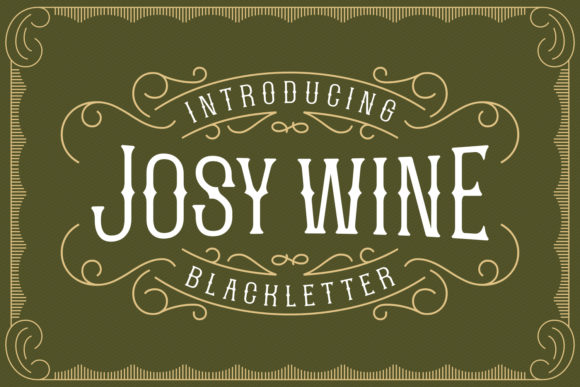
Integrating Josy Wine into Creative Workflows for Distinctive Brand Identity
In the landscape of digital and print design, typography is rarely just about readability; it is a primary vehicle for tone, heritage, and visual hierarchy. When a project demands a specific aesthetic—one that balances historical weight with modern boldness—selecting the right typeface becomes a critical step in the creative process. Josy Wine emerges as a specialized tool in this context, offering a playful yet authoritative blackletter style that carries an undeniably vintage charm. For professionals ranging from freelance designers to small business owners, integrating Josy Wine into a workflow requires more than simply dropping it onto a canvas. It involves understanding its structural characteristics, its compatibility with other design assets, and how it can be used strategically to elevate a brand’s narrative.
Understanding the Typographic Character of Josy Wine
Before implementing any font into a production pipeline, one must analyze its functional attributes. Josy Wine is classified as a blackletter typeface, a category historically associated with medieval manuscripts and traditional printing presses. However, unlike rigid, academic Gothic fonts, Josy Wine introduces a "playful" quality. This duality is crucial for modern workflows because it allows the font to serve as both a decorative element and a statement piece without feeling archaic or difficult to read.
The "Wine" suffix in the name often suggests a rich, deep color palette or a sense of indulgence, which translates visually through the font’s thick strokes and sharp serifs. For creators, this means the font is best utilized in contexts where you want to evoke tradition, craftsmanship, or authenticity. It fits naturally into workflows involving:
- Brand Identity Development: Establishing a logo or wordmark that needs to stand out in a crowded market.
- Packaging Design: Creating labels for artisanal products such as craft beers, wines, or organic foods.
- Event Marketing: Designing posters or invitations for festivals, concerts, or heritage-themed gatherings.
- Editorial Layouts: Using headlines in blogs or magazines to draw attention to specific stories or sections.
Pre-Production: Planning and Asset Preparation
Successful implementation begins before the design software is even opened. The first phase of working with a distinctive font like Josy Wine is asset management and licensing verification. Since Josy Wine is a commercial-grade typeface, ensuring you have the appropriate license for your intended use case (web, print, or app) is a non-negotiable step in professional workflows. Skipping this can lead to legal complications later in the project lifecycle.
Once licensed, the next step is preparation. Blackletter fonts are complex. They contain intricate details that can break down if scaled incorrectly or rendered at low resolutions. In your pre-production checklist, ensure you have high-resolution vector files available. If you are working on a digital campaign, verify that the font supports the necessary web formats (such as WOFF2) to ensure fast loading times and consistent rendering across different browsers. This technical preparation prevents bottlenecks during the actual design execution.
Integration During the Creative Process
When you move into the active design phase, the interaction between Josy Wine and other elements becomes paramount. Because of its bold visual weight, this font acts as a dominant force in a composition. It does not play well in the background; it demands space. Therefore, integration strategies should focus on contrast and balance.
Pairing with Complementary Typefaces
A common mistake in workflow execution is attempting to let Josy Wine do all the heavy lifting. To maintain readability and visual harmony, pair it with neutral, sans-serif, or simple serif fonts. The clean lines of a modern sans-serif provide a stark contrast to the ornate curves of Josy Wine, allowing each typeface to shine. For example, using Josy Wine for main headlines and a clean geometric sans-serif for body copy creates a hierarchy that guides the reader’s eye effectively. This pairing strategy is essential for maintaining user experience (UX) standards, particularly in web design where long-form reading is required.
Color and Texture Considerations
The "vintage charm" of Josy Wine is amplified by thoughtful color choices. In a physical production workflow, consider how ink density affects the thin parts of the letters. On screen, this is less of a concern, but color psychology plays a role. Deep burgundies, forest greens, and mustard yellows complement the wine theme and enhance the retro feel. However, avoid over-saturating the design. Let the typography remain the focal point by keeping backgrounds relatively simple or using subtle textures like paper grain or noise overlays. These texture additions help ground the font, preventing it from looking too digital or sterile.
Post-Production: Quality Control and Consistency
After the initial design is complete, the focus shifts to quality control. With complex typefaces, kerning (the spacing between individual characters) is often problematic. While Josy Wine likely comes with optimized kerning pairs, manual adjustments may be necessary when setting short headlines or single words. Take the time to inspect these micro-details. A poorly spaced letter can undermine the professionalism of an otherwise polished design.
Furthermore, consistency is key for brand longevity. If Josy Wine is being adopted as part of a brand identity, create a style guide that dictates its usage rules. Define clear parameters for:
- Minimum Size: Determine the smallest size at which the font remains legible.
- Usage Contexts: Specify where it can and cannot be used (e.g., never for body text).
- Color Variations: Provide hex codes or CMYK values that work best with the font’s dark tones.
This documentation serves as a reference for future projects, ensuring that whether you are handing off work to another designer or updating marketing materials years later, the visual language remains coherent.
Long-Term Value and Adaptability
One of the most valuable aspects of incorporating Josy Wine into your toolkit is its adaptability across mediums. A font that looks good on a website header might fail miserably on a business card or a large-format billboard. Test the font in various real-world scenarios early in the process. Does it reproduce well in monochrome? Does it hold up when embossed on packaging? These tests reveal the font’s true versatility.
For educators and bloggers, Josy Wine can be a powerful tool for capturing attention in an era of information overload. Its unique shape stops the scroll, encouraging users to engage with the content. However, the goal should always be engagement followed by clarity. Use the font to hook the audience, then rely on accessible secondary fonts to deliver the message. This approach respects the user’s cognitive load while still delivering a memorable aesthetic experience.
Conclusion on Workflow Integration
Ultimately, Josy Wine is not just a decorative choice; it is a strategic decision that impacts the entire communication chain. By treating the font as a core component of your workflow—from licensing and preparation to pairing, testing, and documentation—you ensure that its vintage charm enhances rather than hinders your objectives. Whether you are launching a new product line, redesigning a corporate identity, or creating content for a niche audience, integrating Josy Wine with intention leads to outcomes that are both visually striking and functionally sound. The key lies in respecting the font’s character while maintaining a disciplined approach to design principles.