Ruthless: Navigating the Dark Side of Blackletter Typography
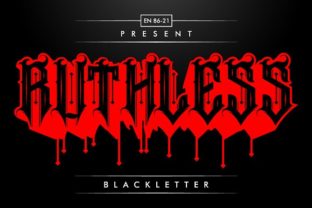
Typography is more than just selecting a font that looks good; it is about communicating the right emotion and establishing a clear visual hierarchy. When designers encounter Ruthless, they are often immediately drawn to its aggressive aesthetic. Inspired by traditional tattoo art and vintage band logos, this blackletter typeface carries an inherent weight and history. It possesses an overall scary feel that can add a striking touch to designs, making it a powerful tool for specific niches. However, the very qualities that make Ruthless effective also make it a potential pitfall if used incorrectly.
Many creators download heavy, decorative fonts without considering their practical application. While Ruthless is undeniably cool, treating it as a general-purpose display font is a common mistake. Understanding the nuances of blackletter typography—and Ruthless specifically—is essential for maintaining readability and professional quality in your projects.
Understanding the Aesthetic Origins
To use Ruthless effectively, you must first understand what it represents. The font draws heavily from the visual language of punk rock, metal music, and old-school tattoo culture. These genres rely on high contrast, intricate details, and a sense of rebellion or danger. The "scary" feel mentioned in its description is not accidental; it is designed to evoke a visceral reaction.
For entrepreneurs in the entertainment, fashion, or alternative lifestyle sectors, this aesthetic is invaluable. A concert poster, a brand identity for a leather goods company, or a logo for a craft brewery might benefit from the raw energy Ruthless provides. However, this power comes with responsibility. Because the font is so stylized, it cannot be treated like a standard sans-serif or serif typeface. It demands attention, but it also demands respect for its legibility limits.
Common Mistakes in Usage
The most frequent error users make with Ruthless is overuse. There is a temptation to set entire paragraphs in blackletter because it looks uniform and bold. This is a critical misunderstanding of how human eyes process complex shapes. Blackletter fonts have dense counters (the enclosed spaces within letters) and thick strokes. When these elements crowd together in long blocks of text, they create a visual noise that fatigues the reader quickly.
Another significant mistake is ignoring context. Using Ruthless for a corporate annual report, a medical brochure, or a children’s educational app creates a jarring dissonance. The font’s aggressive tone clashes with the need for clarity, trust, and approachability in those fields. This mismatch can undermine the credibility of the message, causing the audience to question the professionalism of the sender.
Furthermore, many beginners overlook the importance of spacing. In traditional calligraphy, space is as important as the ink. With digital blackletter, tight kerning and leading can cause the intricate details of the letters to bleed into one another, turning readable text into an indecipherable pattern. This lack of breathability destroys the "striking touch" the font is meant to provide, replacing it with confusion.
The Impact on Readability and Brand Perception
When readability suffers, communication breaks down. If a customer cannot easily read the name of your business or the offer on your flyer, the design has failed, regardless of how stylish it looks. For freelancers and small business owners, this can lead to wasted marketing spend. A beautifully designed but unreadable sign or social media graphic will not convert viewers into customers.
In terms of brand perception, misusing Ruthless can signal a lack of attention to detail. It suggests that the designer prioritized shock value over function. In a market where consumers are increasingly savvy, this can erode trust. Conversely, when used sparingly and correctly, Ruthless signals confidence and niche expertise. It tells the audience, "We know who we are, and we aren't afraid to show it."
Practical Strategies for Effective Application
To avoid these pitfalls, adopt a strategy of restraint and intentionality. Here are several approaches to ensure Ruthless enhances rather than hinders your work:
- Limit Usage to Headlines: Reserve Ruthless for titles, logos, or short pull quotes. Keep body text in a clean, highly legible sans-serif or serif font. This contrast creates a dynamic layout where Ruthless acts as the anchor, drawing the eye without overwhelming the information.
- Master White Space: Give the letters room to breathe. Increase tracking (letter-spacing) and leading (line-spacing) significantly compared to standard fonts. The negative space around the sharp serifs and thick strokes is crucial for defining the shapes. Without adequate spacing, the font loses its distinct character.
- Check Contrast Ratios: Ensure there is sufficient contrast between the text and the background. Light gray text on a white background using a thin variation of Ruthless may become illegible. Dark text on a light background, or vice versa, ensures maximum impact and accessibility.
- Consider the Medium: Be aware of how the font reproduces. On a large-format billboard, the fine details of Ruthless might get lost or look muddy. Test your design at actual size before finalizing. For web use, ensure the font loads quickly and remains readable on smaller mobile screens, possibly scaling back to a simpler variant if necessary.
Evaluating Licensing and Quality
Before integrating Ruthless into a commercial project, verify the licensing terms. Some fonts labeled as "free" may only be available for personal use, requiring a paid license for commercial applications such as client work, merchandise, or advertising. Ignoring these legal distinctions can lead to costly fines and takedown notices later on.
Additionally, evaluate the technical quality of the font file. Poorly constructed vector paths can result in jagged edges when scaled up or printed. Look for fonts that offer multiple weights or styles, which provide greater flexibility in design. A robust font family allows you to maintain consistency while varying emphasis, whereas a single-weight blackletter can become monotonous.
Conclusion on Strategic Choice
Ruthless is a unique asset in any typographic toolkit, offering a direct link to the rebellious spirit of tattoo and band culture. Its ability to add a striking, scary touch makes it ideal for specific creative endeavors. However, its effectiveness relies entirely on the designer’s discipline. By avoiding the trap of overuse, respecting spacing rules, and ensuring contextual appropriateness, you can harness the power of Ruthless without sacrificing clarity or professionalism.
Remember that good design is not just about making things look tough or edgy; it is about solving communication problems. Use Ruthless to solve the problem of standing out in a crowded market, but always pair it with thoughtful structure and accessible supporting elements. When balanced correctly, this font transforms from a mere stylistic choice into a powerful branding statement.