Laandbrau Typeface Evaluation
In the vast landscape of digital typography, selecting the right font is rarely a trivial decision. It involves balancing aesthetic preference with functional requirements, legibility constraints, and brand identity goals. Among the many options available to designers and developers, Laandbrau has emerged as a distinct choice for projects requiring a specific historical or stylistic resonance. Classified as an easy blackletter typeface, Laandbrau offers a unique blend of traditional gothic forms and modern usability. This evaluation explores the characteristics, applications, and limitations of Laandbrau to help professionals determine if it aligns with their specific design needs.
Understanding Laandbrau’s Design Identity
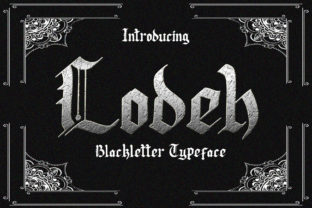
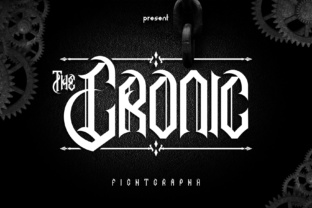
To evaluate Laandbrau effectively, one must first understand its classification. Blackletter, also known as Gothic script or Old English, is a family of calligraphic scripts that became popular in Western Europe during the Middle Ages. Historically associated with religious texts, official documents, and formal announcements, blackletter is characterized by dense vertical strokes, sharp angles, and intricate details. However, traditional blackletter fonts often suffer from poor legibility at small sizes or on low-resolution screens, making them difficult to use in contemporary digital contexts.
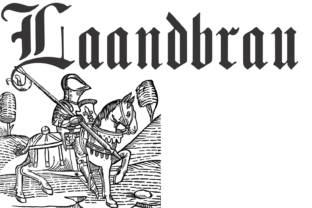
Laandbrau distinguishes itself by positioning as an "easy" blackletter. This descriptor suggests a deliberate simplification of complex historical forms. The typeface likely retains the visual weight and structural integrity of traditional blackletter while streamlining the glyphs to improve readability. By reducing the visual noise inherent in more ornate gothic scripts, Laandbrau aims to bridge the gap between historical authenticity and modern functional design. This approach makes it accessible for a broader range of applications where traditional blackletter might be deemed too aggressive or difficult to read.
Strategic Applications and Use Cases
The decision to use Laandbrau should be driven by the context in which the text will appear. Because it carries strong cultural and historical connotations, it is not a neutral typeface. Its utility is highest in scenarios where the goal is to evoke tradition, heritage, or authority without overwhelming the viewer with complexity.
- Branding for Heritage Industries: Businesses rooted in history, such as breweries, distilleries, bakeries, or artisanal crafts, often utilize blackletter to signal craftsmanship and longevity. Laandbrau provides a viable option for these brands, offering the necessary visual cues of tradition while maintaining a cleaner profile than older, more chaotic gothic fonts.
- Event Typography: For invitations, posters, or signage related to themed events, festivals, or ceremonies, Laandbrau can set the appropriate tone. Its decorative nature grabs attention, yet its "easy" classification ensures that essential information remains decipherable.
- Headline Emphasis: In web and print design, using Laandbrau for headlines or short titles allows designers to create visual hierarchy. The contrast between the heavy, stylized blackletter headings and clean, sans-serif body text can create a striking and balanced layout.
Evaluating Benefits and Tradeoffs
Every typographic choice involves tradeoffs. Understanding these is crucial for making an informed decision about Laandbrau.
Benefits
The primary advantage of Laandbrau is its versatility within the blackletter category. By being easier to read than its historical counterparts, it reduces the cognitive load on the reader. This makes it suitable for longer headlines or subheadings where traditional blackletter would fail. Additionally, it allows designers to incorporate gothic aesthetics into modern layouts without compromising accessibility standards. It serves as a tool for adding character and distinction to a design system that might otherwise feel generic.
Tradeoffs and Limitations
Despite its improvements, Laandbrau remains a display font. It is generally unsuitable for long-form body copy. Even with simplified forms, the density of blackletter characters can cause eye strain when reading paragraphs of text. Furthermore, the specific aesthetic of blackletter may clash with minimalist or ultra-modern design philosophies. Using Laandbrau in a tech startup’s user interface, for example, could create a dissonant brand voice that feels outdated or incongruous.
Another consideration is compatibility. While most modern operating systems support standard web fonts, custom blackletter files need to be properly optimized for web delivery (e.g., using WOFF2 formats) to ensure fast loading times. Poorly optimized display fonts can negatively impact page speed scores, a critical factor in SEO and user experience.
Considerations for Selection
When evaluating whether Laandbrau is the right tool for a project, several practical factors should be weighed against the desired outcome.
- Legibility Requirements: Assess the size and duration of exposure. If the text will be viewed quickly or at small sizes, test Laandbrau rigorously. If the goal is immediate recognition and impact, it performs well. If the goal is sustained reading, look elsewhere.
- Brand Alignment: Does the brand story support a gothic aesthetic? Laandbrau works best when the product or service has tangible links to history, craftsmanship, or tradition. Using it for abstract or futuristic concepts may confuse the audience.
- Pairing Potential: Consider how Laandbrau interacts with other fonts in the type scale. It typically pairs well with humanist sans-serifs or simple serif fonts that provide a clean counterpoint. Avoid pairing it with other decorative or high-contrast fonts, as this can create visual clutter.
Alternatives and Comparative Context
If Laandbrau does not fully meet the project's needs, it is worth considering alternatives based on specific criteria. For projects requiring a more traditional, authentic gothic look, fonts like Gotham Black (though technically geometric, often used similarly) or specialized blackletters like Fraktur variants might be considered, though they come with higher legibility risks. Conversely, if the goal is simply to add weight and presence without the historical baggage, a bold slab serif or a heavy sans-serif might be more appropriate.
For digital-first projects where performance is paramount, variable fonts that offer multiple weights in a single file might be a more efficient solution than loading a specialized display font like Laandbrau. Designers should also consider whether the blackletter style is truly necessary or if it is being used merely as a trend. Sustainable design choices prioritize clarity and function over fleeting stylistic trends.
Conclusion: Making the Final Decision
Laandbrau represents a thoughtful evolution of the blackletter genre, prioritizing ease of use without sacrificing stylistic identity. It is a powerful tool for designers seeking to inject heritage and gravitas into their work while maintaining modern standards of readability. However, its application must be strategic. It is not a universal solution but a specialized instrument.
For teams researching typefaces, the recommendation is to prototype Laandbrau in the actual context of the final product. Test it across different devices, screen sizes, and backgrounds. Evaluate not just how it looks in isolation, but how it functions within the broader communication strategy. If the goal is to communicate tradition, quality, and distinctiveness, and if the content length is managed carefully, Laandbrau can be a highly effective addition to the design toolkit. If those conditions are not met, exploring alternative typographic solutions may yield better results for both the user and the brand.